
Newborn sleep: small stretches, changing days
Get to know newborn sleep, recognise tired cues and keep a record that helps rather than adds pressure.
 Sleep
The essentials
- Sleep is spread across day and night in the newborn period.
- Notice your baby's cues instead of chasing a perfect schedule.
- Keep safe sleep and practical support ahead of complete tracking.
A new baby does not arrive with a timetable
Newborn sleep usually comes in stretches across both day and night. Sleep patterns vary between babies and change with development. A friend's account of a long overnight sleep describes their baby on a particular night; it is not a deadline your baby has missed.
In the first days, it can be more helpful to learn the sequence of your own baby's feeds, wakeful moments and rests than to label every stretch as a good or bad nap. Keep following the individual feeding and care advice from your maternity or child health team.
Further guidance: Raising Children Network: Sleep needs and patterns
Notice signs that it is time to settle
Yawning, looking away, changes in focus or jerky movements can be tired signs. They can overlap with other needs, so take a moment to consider hunger, comfort and whether your baby seems well. Looking at your baby gives you information that a timer cannot provide.
When you notice tired cues, try reducing stimulation: a quieter voice, fewer distractions and a familiar settling space. There is no need to keep a baby awake just to reach a number on an online wake-window chart. Use professional guidance if settling or sleep is worrying you.
Further guidance: Raising Children Network: Tired signs
Choose what counts as a sleep entry
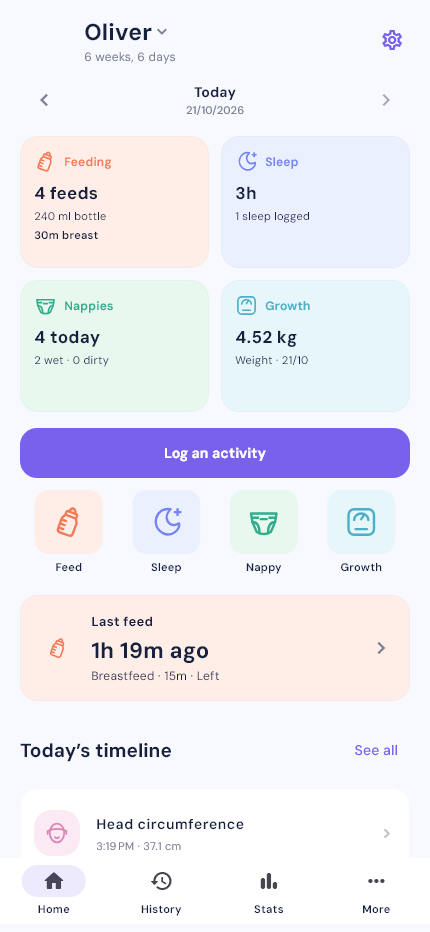
A consistent habit makes your own record easier to read. You might start a sleep entry when your baby appears asleep and finish it when they wake for the next period of care. You do not need to identify the exact second sleep begins.
If you pause a timer for an awake interruption, remember that the pause is excluded from the total. If you forget to stop it, correct the entry later. An honest approximation is more useful than a very precise-looking duration that you know includes an extra hour.
Keep day and night simple
Daylight and ordinary daytime activity can help distinguish day from night. During overnight care, a quiet voice and lower lighting can keep the environment calmer. These are gentle cues, not a promise that your baby will sleep through after a certain number of days.
If you want to try a routine, choose a few repeatable steps that fit your family rather than an elaborate checklist. A change, a feed when needed and a calm transition can be enough to begin noticing what works. Meeting your baby's needs comes before completing a routine in a fixed order.
Further guidance: NHS: Helping your baby to sleep
Make safe sleep the constant
For sleep, use a firm, flat, clear sleep space and place your baby on their back. The NHS recommends a separate cot or bassinet in your room for the first six months. A sleep timer records what you enter; it does not assess the environment, monitor breathing or supervise your baby.
Read the full safer-sleep guidance for your country and circumstances with everyone who will care for your baby. Keeping that plan consistent is more important than whether one nap was logged to the nearest minute.
Further guidance: NHS: Safer sleep advice
Leave some room for your own rest
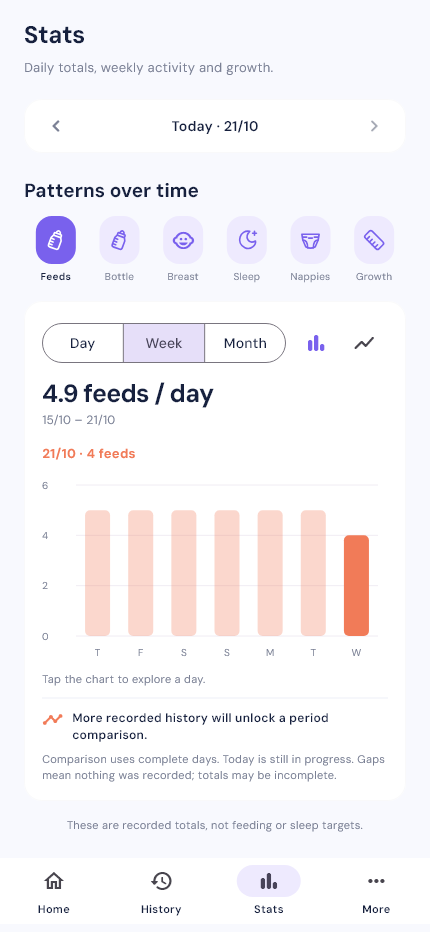
A tracking habit should remove a little mental effort, not create another job you must finish before resting. If recording every sleep makes the day harder, simplify the habit. You can keep approximate times, focus on a question for an appointment or take a break from tracking.
Ask a trusted person for a specific kind of help, such as preparing a meal or handling a household task while you rest. If sleep concerns or exhaustion are becoming hard to manage, speak with your healthcare team. You deserve support even when your baby's chart looks ordinary.
Sources & further reading
For the full guidance and advice for your circumstances, start with your local healthcare team and these resources.
Raising Children Network: Sleep needs and patternsRaising Children Network: Tired signsNHS: Helping your baby to sleepNHS: Safer sleep adviceGeneral information only. This site and app do not diagnose, treat or monitor medical conditions. If your baby seems unwell, seek medical advice rather than waiting to collect more records.
A little more to explore
A simple starting point for safer sleep
Prepare a clear sleep space, plan for tired nights and make sure every caregiver knows the same basics.
Read guideNaps, night waking and the bigger picture
Make useful comparisons, handle interrupted timers and understand the limits of a sleep graph.
Read guide