
Bottle feeding, one feed at a time
Responsive feeding, safe preparation and a clear record of the milk your baby actually takes.
The essentials
- Hold your baby for a feed and follow their pauses.
- Record consumed milk, rather than the bottle's starting amount.
- Follow current preparation and storage guidance for the milk you use.
Settle in and let your baby lead
Bottle feeding is time together, whether the bottle contains expressed milk or formula. Hold your baby close in a supported, partly upright position and stay with them throughout. Give them time to take the teat rather than pushing it into their mouth. Never leave a baby feeding alone with a bottle propped in place.
The lines on the bottle are useful for keeping a record; they are not a reason to make your baby finish. Feeding is a conversation between you and your baby, and the amount taken can differ from one feed to the next.
Further guidance: NHS: Bottle feeding advice
Make room for pauses
Paced feeding gives a baby opportunities to control the flow and take breaks. Watch for changes such as slowing down or turning away, and allow a pause rather than keeping milk flowing continuously. Ask a child health professional to demonstrate positioning and pacing if you are unsure.
A pause does not have to be recorded as a second bottle. Keep one entry for the same feeding session and use a short note if it helps explain an interruption. If feeding regularly seems difficult, bring that concern to your healthcare team rather than only changing the numbers you offer.
Further guidance: Pregnancy, Birth and Baby: Bottle feeding your baby
Calculate what was actually consumed
Record the amount offered and subtract what remains. If the bottle started with 120 ml and 30 ml is left, the recorded intake is 90 ml. Do not log 120 ml and then add a second 90 ml entry; that would count the same feed twice.
The feeding amounts tool on this site performs that subtraction. It cannot tell you how much to prepare or prescribe your baby's daily intake. A spill makes the consumed amount uncertain, so use an honest estimate with a note instead of presenting the bottle difference as an exact measurement.
Keep preparation separate from tracking
Use the current instructions for the milk product and equipment you have, together with your local health service's guidance. Formula preparation and expressed-milk storage have different requirements. A previous feed in an app is not a safe-preparation instruction for the next one.
Measure formula exactly as directed; do not dilute or concentrate it to change a total. Do not warm bottles in a microwave because of uneven heating. Follow the relevant guidance for leftover milk and discard it when required instead of keeping it to make the next logged amount look tidier.
Further guidance: NHS: Bottle feeding advice · Pregnancy, Birth and Baby: Bottle feeding your baby
Make handovers easy to understand
Agree whether everyone is entering millilitres or fluid ounces, and check the unit before copying a number from a bottle. Baby Tracker labels its imperial milk volume as US fl oz. A number without its unit is much less useful when someone else takes over care.
A practical handover might be: ‘Bottle at 10:20; 90 ml taken; about 30 ml spilled before the feed.’ Keep the time of the feed, rather than the time you remembered to enter it. Check for an existing entry when two caregivers were present together.
Review the pattern, not a target
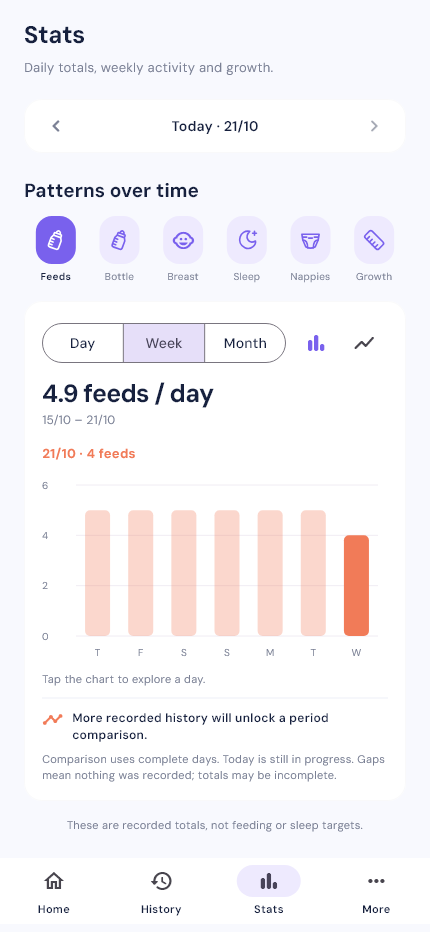
Look through complete days before comparing totals. A missing bottle, a duplicated entry or an accidental unit choice can change a chart considerably. Breastfeeding minutes should stay separate from bottle volume because the two measurements cannot be added together.
If you are worried about feeding, take the dated record and your questions to your healthcare team. Include what you observed during feeds, rather than only a daily number. An app can help you remember; it cannot establish whether a particular intake is appropriate for your baby's circumstances.
Sources & further reading
For the full guidance and advice for your circumstances, start with your local healthcare team and these resources.
NHS: Bottle feeding advicePregnancy, Birth and Baby: Bottle feeding your babyGeneral information only. This site and app do not diagnose, treat or monitor medical conditions. If your baby seems unwell, seek medical advice rather than waiting to collect more records.
A little more to explore

Breastfeeding: finding your rhythm
Recognising feeding cues, getting comfortable and knowing what is worth recording.
Read guideUnderstanding changing feeding patterns
Read a feeding history with more confidence, without turning every change into a conclusion.
Read guide